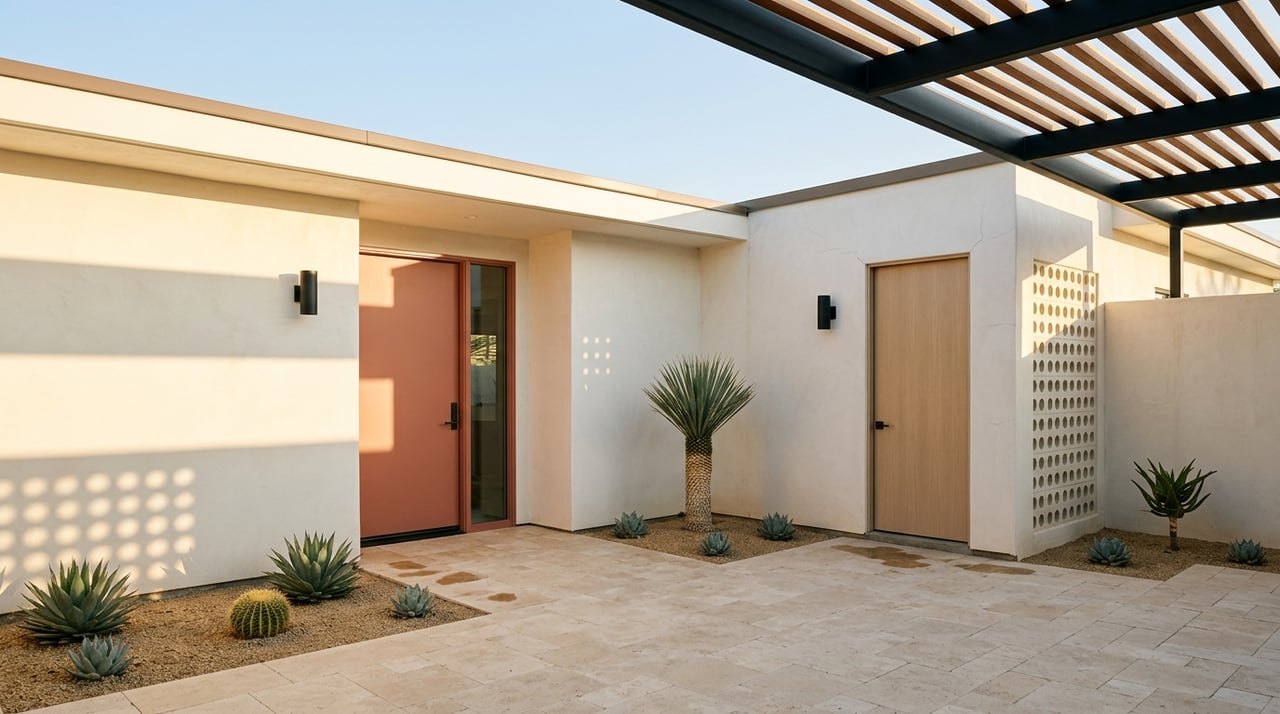
Palm Springs Second Home vs Rental: Which Is Right?
June 25, 2026
June 25, 2026
Trying to decide whether your Palm Springs purchase should be a personal retreat or an income-producing rental? It sounds like a simple lifestyle choice, but in Palm Springs, local rules can shape that decision as much as your budget or design wish list. If you are weighing personal use, rental income, or a mix of both, this guide will help you sort through the tradeoffs so you can buy with more clarity and fewer surprises. Let’s dive in.
In Palm Springs, the first question is not just how you want to use the home. It is whether the property can legally support that plan. The city defines a vacation rental as a single-family dwelling, or part of one, used for lodging without the owner present for 28 consecutive days or less.
Stays of 29 days or more are treated differently. They do not fall under the city’s short-term vacation rental ordinance. That distinction matters because it creates a very different path for buyers who want seasonal income without running a short-term rental.
If you want to operate a standard vacation rental, Palm Springs requires a vacation-rental registration certificate. The city states that operating or advertising without one is illegal. Written approval must be issued before any bookings or marketing can happen.
Just as important, a certificate does not transfer when a property sells. The seller must close out the certificate and cancel future bookings, and the new owner must apply again before renting the property. In other words, buying a home that was once used as a vacation rental does not guarantee you can continue that use right away.
For most buyers, the real choice comes down to three practical models. You can buy a pure second home, a standard vacation rental, or something in between. Each option fits a different lifestyle and level of involvement.
A pure second home is usually the simplest route. If your main goal is to enjoy Palm Springs on your own schedule, this option avoids the moving parts that come with guest stays, compliance deadlines, and monthly tax filings.
This can be a strong fit if you picture long weekends by the pool, seasonal stays, or a design-forward desert escape that stays ready for your personal use. For many buyers, the value is flexibility and ease. You get the lifestyle without the operational burden.
A standard vacation rental is better suited to buyers who want income and are prepared to run a regulated hospitality-style property. Palm Springs allows this use only with city approval, and there are several rules that can affect whether the plan works at all.
The city allows only one vacation rental per eligible owner or entity, and corporations cannot hold a certificate. Standard vacation rentals are also capped at 26 contracts per calendar year. If you are counting on frequent short stays, that contract limit should be part of your math from day one.
A homeshare can be the middle ground. Under Palm Springs rules, the owner must live on-site and be present during the entire guest stay. The upside is that homeshare certificates are not subject to the same neighborhood percentage caps, and there is no annual limit on how many times the home can be rented this way.
Another middle-ground option is renting for 29 days or longer. Since those stays sit outside the vacation-rental ordinance, some buyers find that this approach better matches their goals. It can offer income potential with fewer short-term rental restrictions.
In Palm Springs, not every home is equally viable as a vacation rental. Even if a property looks perfect on paper, neighborhood permit availability may stop the plan before it starts.
The city uses neighborhood-based caps. If a neighborhood is at or above a 20% vacation-rental-to-residential-household ratio, new standard vacation-rental applications are returned and may be wait-listed. That means the right house in the wrong permit environment may not serve your intended use.
If the home is in an HOA, there is another layer. The city requires a letter from the HOA board or property manager confirming that short-term rental use does not violate the CC&Rs. So before you fall in love with a property, it is smart to verify both city and HOA compatibility.
One of the clearest ways to decide is to be honest about how hands-on you want to be. A second home and a vacation rental may look similar at purchase, but they operate very differently once you own them.
A second home is usually lower friction. You are not managing guest turnover, contract paperwork, inspections tied to rental use, or monthly tax remittance. For buyers who want Palm Springs to feel restful and uncomplicated, that simplicity can be worth a great deal.
A vacation rental can create income, but it comes with active administration. Palm Springs requires annual renewal, an annual safety inspection, and a short-term rental insurance policy or personal liability policy with at least $500,000 per occurrence. Standard vacation rentals also require a written contract and a contract summary process before each occupancy.
If you are leaning toward a vacation rental, it is important to model the true cost of ownership. Gross rental income is only one part of the picture.
Palm Springs charges an 11.5% transient occupancy tax on vacation rentals and agencies, plus a 1% TBID assessment on short-term stays of less than 28 days. Owners remit these monthly, even when no tax is due. That creates an ongoing reporting obligation you will need to stay on top of.
There is also the cost of compliance itself. Insurance, safety inspections, renewals, turnover, and administration all affect net performance. If your goal is mostly personal enjoyment, those extra layers may outweigh the benefit of occasional short-term income.
In Palm Springs, vacation rental rules are not just suggestions. The city actively enforces them, which is why buyers should treat compliance as part of the investment decision.
According to the city, repeated violations can lead to suspension. Advertising or operating without the required certificate, contract, contract summary, or timely tax payment can trigger a $2,500 first-offense fine and a six-month suspension. A second offense can bring a $5,000 fine and revocation.
That level of enforcement is a major reason many buyers choose a true second home unless they are fully ready for a regulated rental operation. If you want income, you need a plan that is legal, realistic, and manageable.
Palm Springs benefits from strong tourism, which supports both personal use and rental interest. Visit Greater Palm Springs reports that tourism generated $9.1 billion in total economic impact in 2024, supported about one in four local jobs, and drew 14.5 million annual visitors.
That said, rental demand is not flat across the year. Recent vacation-rental data from Visit Greater Palm Springs showed paid occupancy at 51.6% in March 2026, 36.4% in April 2026, and 34.5% in May 2026. Average daily rates ranged from $443 in March to $806 in April.
Those figures show why buyers should not rely on one simple annual average. Seasonality matters, and calendar occupancy is not the same as paid occupancy. The destination data notes that online travel calendar occupancy can include owner stays, maintenance holds, and other non-paid blocks.
If you are still torn, a few practical questions usually point to the right answer. Start with how often you truly plan to use the home yourself. If personal use is the priority, a second home often makes the most sense.
Next, confirm whether the neighborhood is below the city’s 20% cap and whether the HOA allows short-term use. After that, think about your ownership structure, your comfort with monthly filings and operational details, and whether a homeshare or 29-day-plus lease could better match your goals.
In Palm Springs, the cleanest framework is this: choose a second home if you want flexibility and low operating friction. Choose a vacation rental if you want to run a regulated income property and the permit path is available. Consider homeshare or longer stays if you want a middle option between personal enjoyment and income.
Buying in Palm Springs is often about more than square footage or style. The best fit usually comes down to how you want to live, how you want the property to work for you, and whether the rules support that vision. If you want help evaluating a property through both a lifestyle and local-market lens, Ryan Cummings can help you think through the options with clarity.
Stay up to date on the latest real estate trends.
Etiam non quam lacus suspendisse faucibus interdum. Orci ac auctor augue mauris augue neque. Bibendum at varius vel pharetra. Viverra orci sagittis eu volutpat.